Car sticker design has evolved into a sophisticated blend of personal expression, commercial branding, and high-end digital artistry. Whether for a business promotion or a cultural celebration like a wedding, a well-designed sticker serves as a mobile billboard that captures attention through specific aesthetic choices and material quality.
1. Conceptualization and Visual Hierarchy
The most effective car sticker designs prioritize readability and a clear visual hierarchy. Since vehicles are often in motion, the core message must be legible from a distance.
Typography: Designers often use bold, high-contrast fonts. For instance, in professional banners, golden-yellow scripts with thin black outlines are frequently used to ensure the text “pops” against deep-colored backgrounds.
Imagery: High-resolution, photorealistic elements, such as 3D-effect panels or intricate traditional motifs, add a premium feel to the design.
Composition: A balanced layout—often centering the main logo or name and using circular insets for secondary photos—helps organize information without cluttering the limited space of a vehicle’s surface.
2. Material and Durability
Car stickers must withstand environmental stressors such as UV rays, rain, and fluctuating temperatures.
High-Resolution Output: Modern designs are often rendered in ultra-high-resolution (4K or 8K) to ensure that every texture, from gold foil to fabric patterns, remains distinct when printed.
Finish Options: Premium stickers may utilize specific textures like sophisticated geometric patterns or textile-like gradients to create a luxurious look.
Vinyl Quality: Professional-grade vinyl is standard for automotive use, ensuring that the sticker can be applied smoothly and removed without damaging the car’s paint or glass.
3. Cultural and Personal Customization
In many contexts, car stickers are used to celebrate life milestones or represent a specific brand identity.
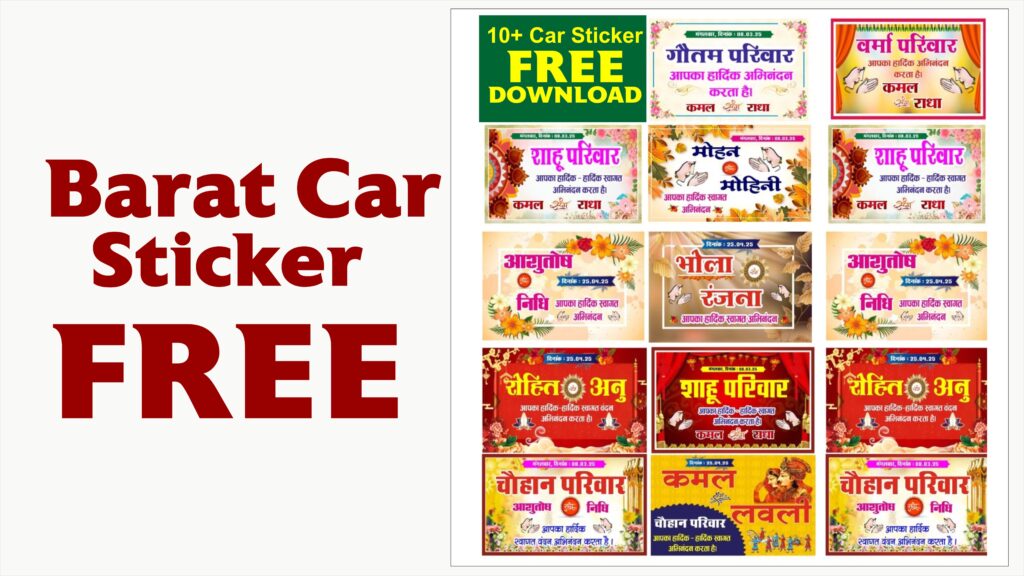
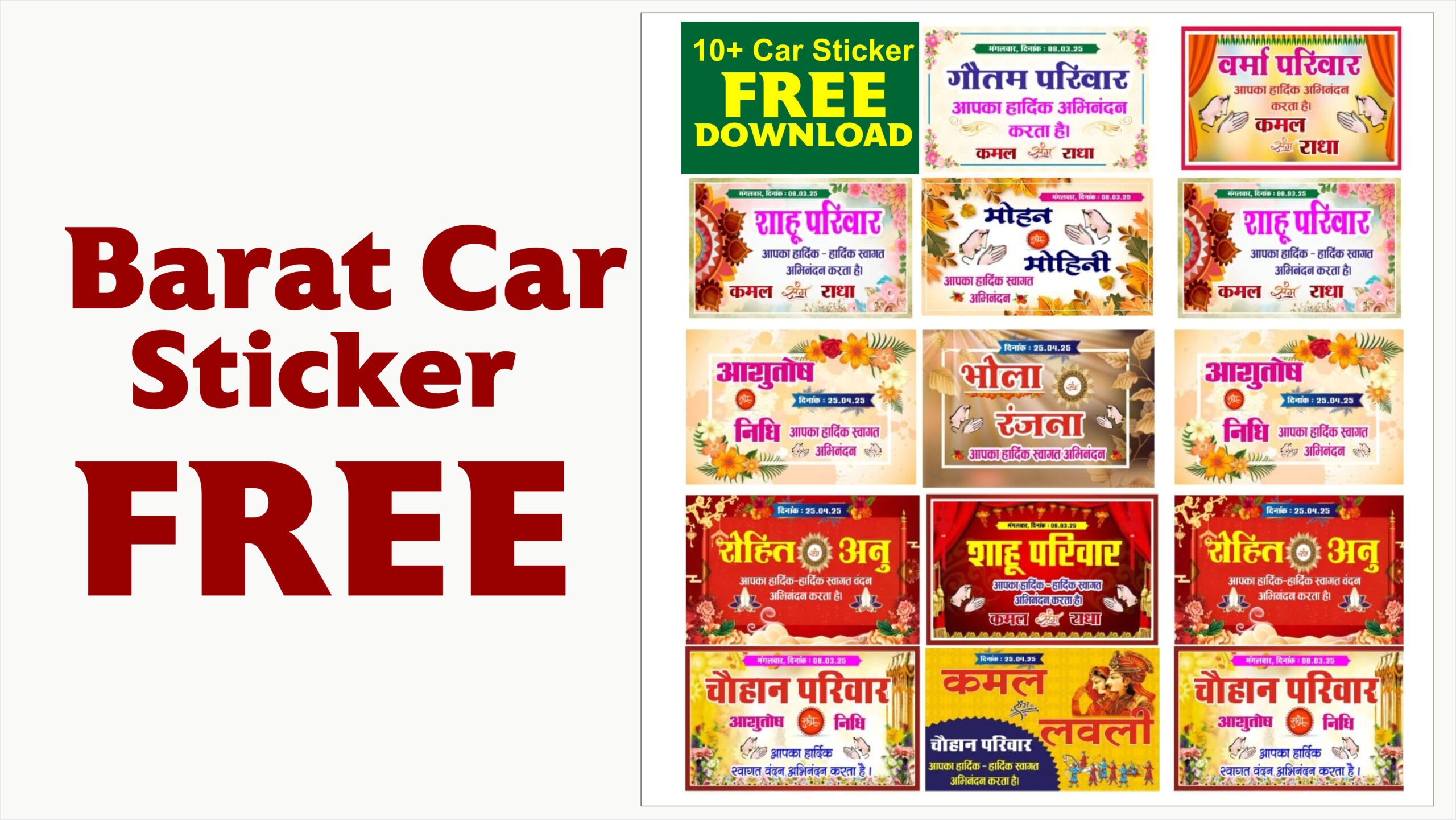
Wedding Celebrations: In Indian culture, “Barat” stickers are a staple. These often feature customized names of the couple, such as Rohit & Monika, and specific wedding dates.
Religious Symbols: Incorporating spiritual icons, like a 3D golden idol of Lord Ganesha, is a common practice to signify a blessed journey.
Brand Identification: For creators or businesses, stickers act as a mobile identity. Designs often incorporate professional labels, addresses (like Gomti Nagar, Lucknow), and contact details to facilitate brand recognition.
4. The Role of Technology in Design
Artificial Intelligence has revolutionized the sticker design process by enabling “Generative Fill” and advanced upscaling.
Photorealism: AI allows for the creation of “indistinguishable from real-life” imagery, where textures like makeup powder or jewelry look 100% authentic.
Precision Editing: Tools now allow designers to place graphic elements with extreme accuracy, such as moving text from “on-screen” to specific designated panels.
Consistent Identity: For personal branding, AI can ensure exact face matching and identity preservation, which is crucial for creators who want their likeness on their promotional assets.
By combining traditional cultural motifs with cutting-edge AI design tools, car stickers have transitioned from simple labels to intricate pieces of high-end stationery that reflect the owner’s personality and professional standards.
नोट -फाइल में पासवर्ड लगा है बिना स्पेस का, नीचें ध्यान से देखें
File Password- ROHITRAJCREATIONS