
The Art of Crafting High-Impact Posters
Poster editing bridges the gap between raw graphic design and strategic visual communication. Whether you are creating promotional materials for a corporate event, designing a film poster, or putting together an academic presentation, the editing phase is where your visual narrative is refined. Effective poster editing transforms a cluttered layout into a polished, high-impact asset that commands attention from a distance and delivers its message within seconds.
Achieving Visual Hierarchy and Layout Balance
The foundational principle of successful poster editing is establishing a clear visual hierarchy. When a viewer looks at your poster, their eyes should follow a deliberate, pre-determined path. Typically, this starts with a dominant focal point, which is often a bold headline or a striking hero image. From there, the eye naturally moves to the secondary information, such as event details, dates, or a call to action. During the editing process, it is essential to ruthlessly eliminate competing elements. If an image, a graphic shape, or a text block does not directly support the primary objective of the poster, it should be removed to give the remaining content room to breathe.
Color Strategy and Typography Harmony
Color and typography are the emotional drivers of your design, and editing them requires a strict eye for consistency. A common pitfall is using too many distinct fonts or a chaotic color scheme, which instantly cheapens the look. Stick to a maximum of two or three complementary typefaces, ensuring that your primary font is highly legible from several feet away. When editing colors, stick to a unified palette that aligns with your brand or the specific mood of the event. Contrast is your best friend here, so make sure your text heavily contrasts with the background to guarantee maximum readability under various lighting conditions.
The Power of Negative Space and Final Polishing
One of the most valuable choices an editor can make is embracing negative space, which is the empty area around your design elements. Far from being wasted space, negative space prevents visual fatigue, separates distinct information blocks, and makes the overall composition feel modern and professional. The final stage of your editing workflow should always involve a comprehensive quality check. Review the spelling and grammar, double-check that critical information like URLs or dates are accurate, and step back from your screen to evaluate how the poster reads from a distance. A meticulously edited poster does not just look great, it communicates flawlessly.
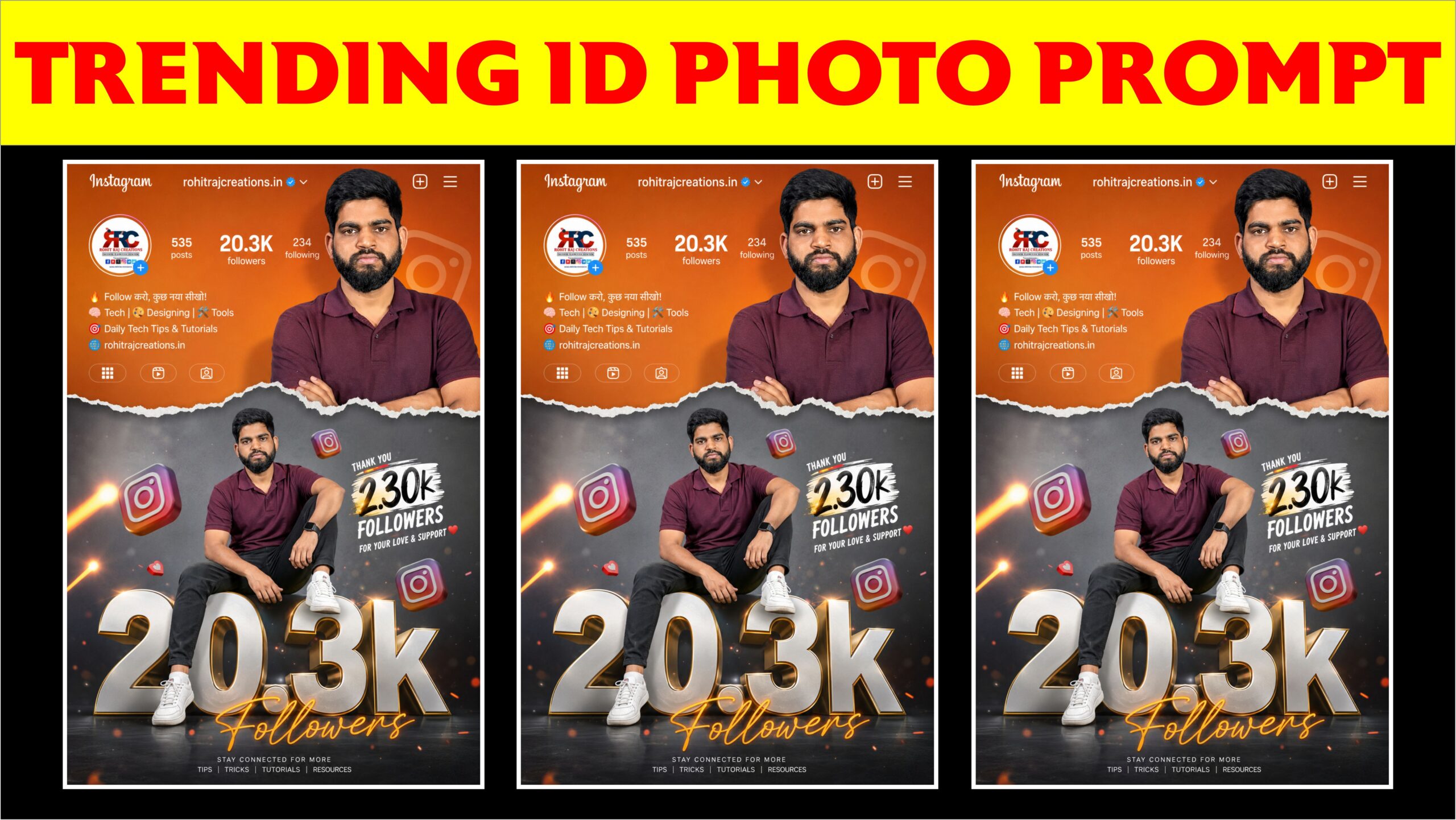
Vibrant Instagram milestone poster celebrating 2.30k followers. The main subject(Artistic ) is stylishly posing in two different positions – one full-body sitting pose on top of a big 3D metallic “20.3k” text with floating Instagram icons. and another half-body stylish photo above with torn paper effect transition between orange gradient and grey background. The top section shows an Instagram profile interface with username.20.3k count. bio, and icons. Generate photo