
The digital landscape has been fundamentally reshaped by the integration of Artificial Intelligence (AI) into photo editing. From the early days of manual darkroom manipulations to the introduction of pixel-based digital software, post-processing has always been critical to photography. Today, AI algorithms and deep learning neural networks are transitioning photo editing from a highly technical, labor-intensive craft into an intuitive, accessible, and remarkably efficient process.
The Core Mechanisms of AI Editing
Traditional photo editing relies entirely on manual execution—using sliders, masks, and brushes to alter pixels. In contrast, AI-powered editors interpret the content of an image contextually.By analyzing massive datasets of visual media, these systems can distinguish subtle details within a photograph, such as separating a human subject from a complex background, identifying individual facial features, or recognizing the horizon line. This deep contextual awareness allows software to automate intricate tasks with singular clicks, bypassing hours of manual masking.
Key Features and Breakthroughs
The practical applications of AI in photo editing span from minor technical enhancements to expansive creative generations:
Generative Fill and Expansion: Leveraging advanced generative models, tools can add completely new, contextually aware elements to an photo or expand an image seamlessly beyond its original borders, synthesizing new backgrounds that match the original lighting and texture.
Object Removal and Background Manipulation: Intelligent “magic erasers” allow users to isolate and eliminate unwanted background distractions or completely swap environments instantly, automatically recalculating shadows and color tones to maintain realism.
Automated Retouching and Restoration: AI can intelligently enhance skin textures, correct exposure selectively, and reduce sensor noise without losing critical fine details. Furthermore, it excels at digital photo restoration—repairing scratches, sharpening blurred elements, and upscaling low-resolution, legacy photos into crisp, high-definition formats.
Striking the Balance: Speed vs. Creative Control
For digital creators, e-commerce brands, and social media professionals, the primary advantage of AI editing is unprecedented workflow efficiency. Processing large batches of images—such as applying consistent color grading or resizing product photos—can now be executed in seconds.
However, this reliance on automation introduces specific limitations. AI can occasionally over-edit, leading to overly smoothed skin textures or artificial-looking compositions that lack a genuine human touch. It also faces challenges when dealing with intricate color accuracy requirements or highly specific brand styling guidelines that require subjective artistic intuition.
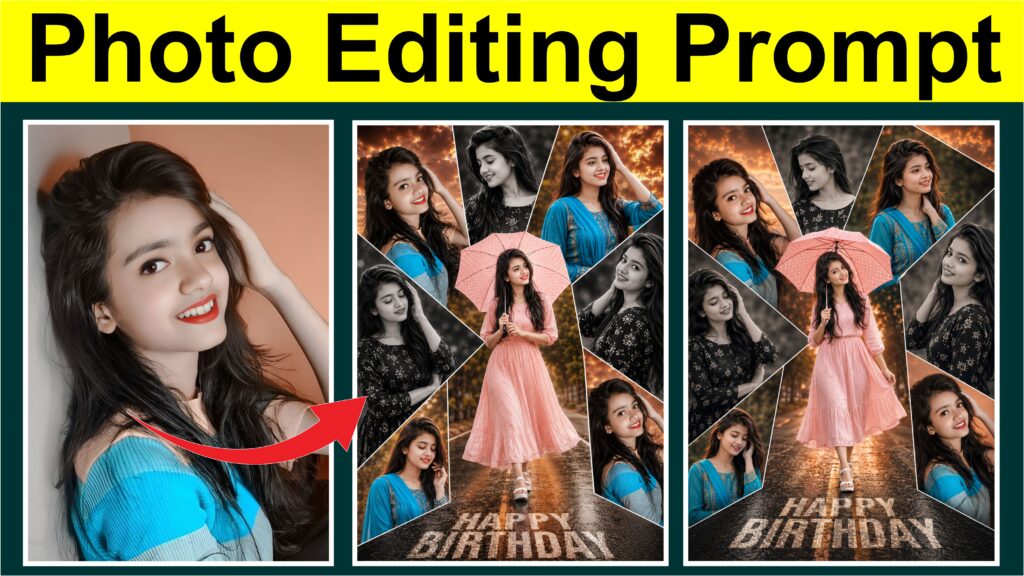
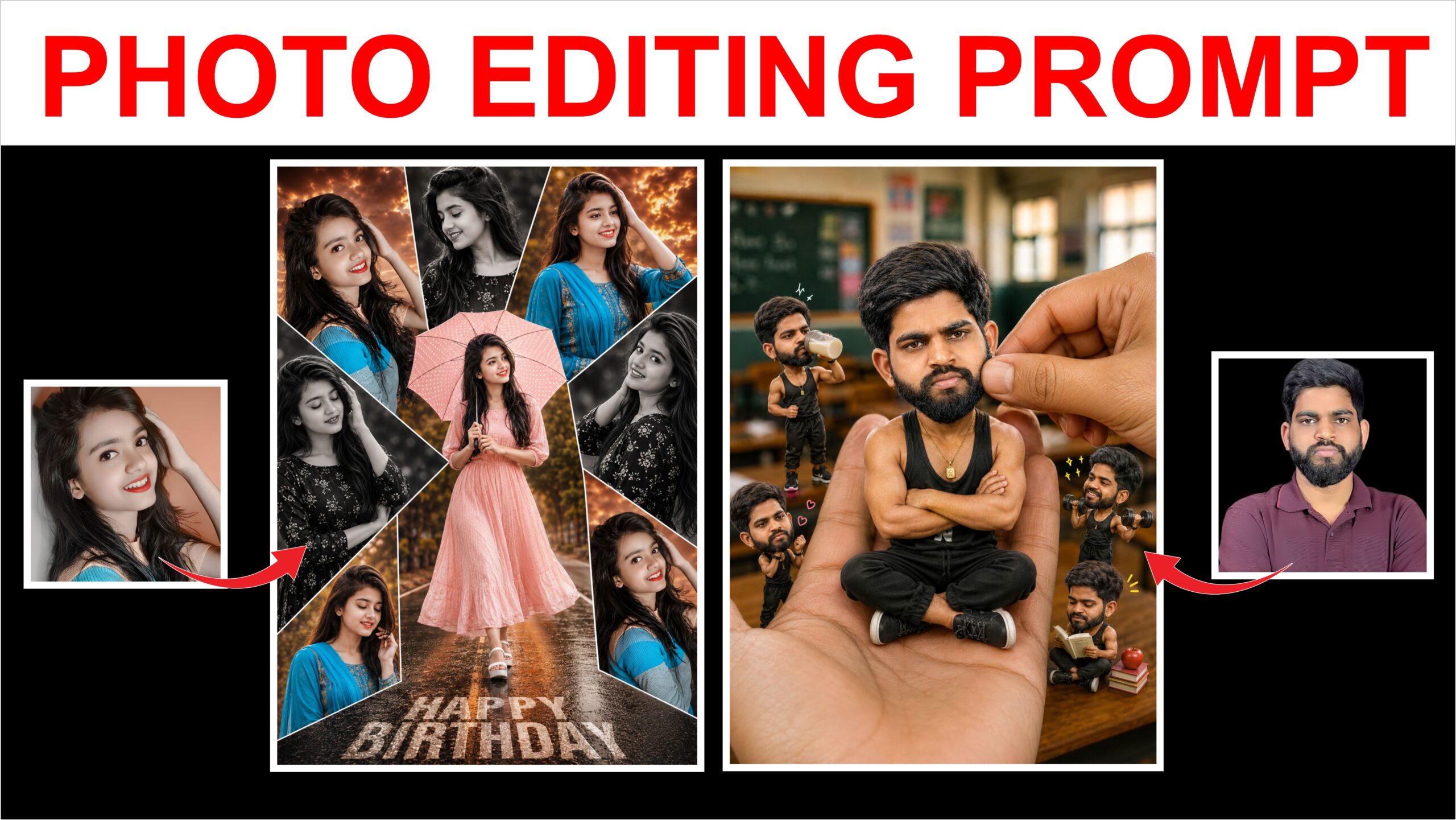
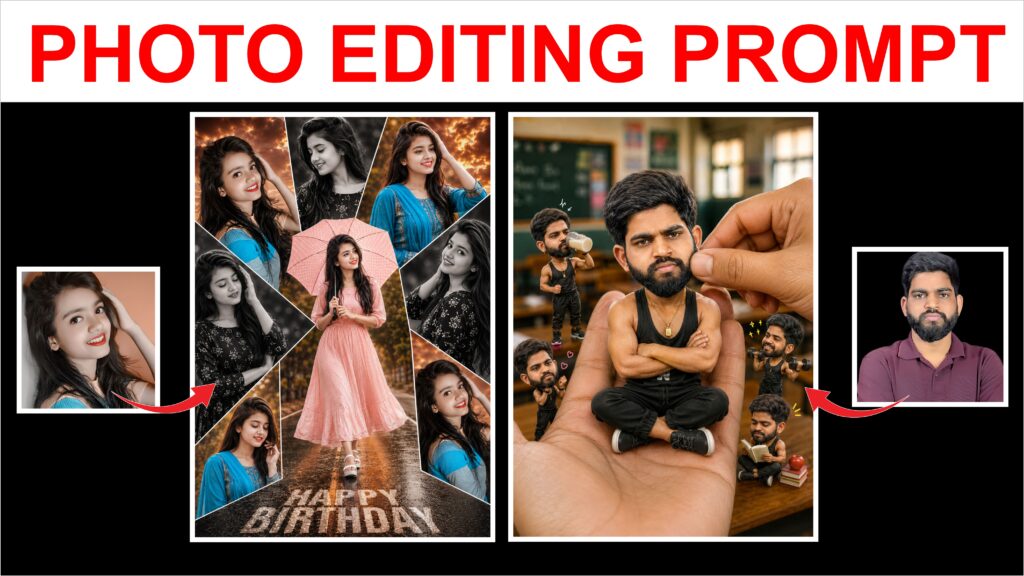
Create a cinematic birthday photo collage poster featuring a beautiful young Indian girl in multiple elegant poses. The main center portrait should show her walking confidently on a wet road while holding a soft pink polka-dot umbrella, wearing a flowing pastel pink dress and white sandals. She should have natural makeup, tied-back hair with loose strands, and a soft smile.
Surround the center image with multiple tilted polygon-style photo frames containing different portraits of the same girl in various outfits and poses:
black floral dress portraits in monochrome effect
blue traditional salwar suit portraits in vibrant color
close-up smiling shots
side profile candid shots
soft emotional poses looking downward
Use a stylish geometric collage layout with white borders between frames. Background should feature a dreamy sunset sky with golden clouds and warm cinematic tones. The road should appear slightly wet with realistic reflections and depth.
At the bottom of the road, add large bold 3D typography text:
“HAPPY BIRTHDAY”
blended naturally into the road surface perspective.
Style should be ultra realistic, DSLR photography look, soft cinematic lighting, warm brown-orange color grading, shallow depth of field, highly detailed skin texture, aesthetic Instagram-style editing, professional poster composition, emotional and dreamy atmosphere.
Camera & Quality:
85mm lens, HDR, ultra-detailed, photorealistic, soft bokeh, 8K quality, sharp focus on main subject.
Aspect Ratio: 5:7 portrait.
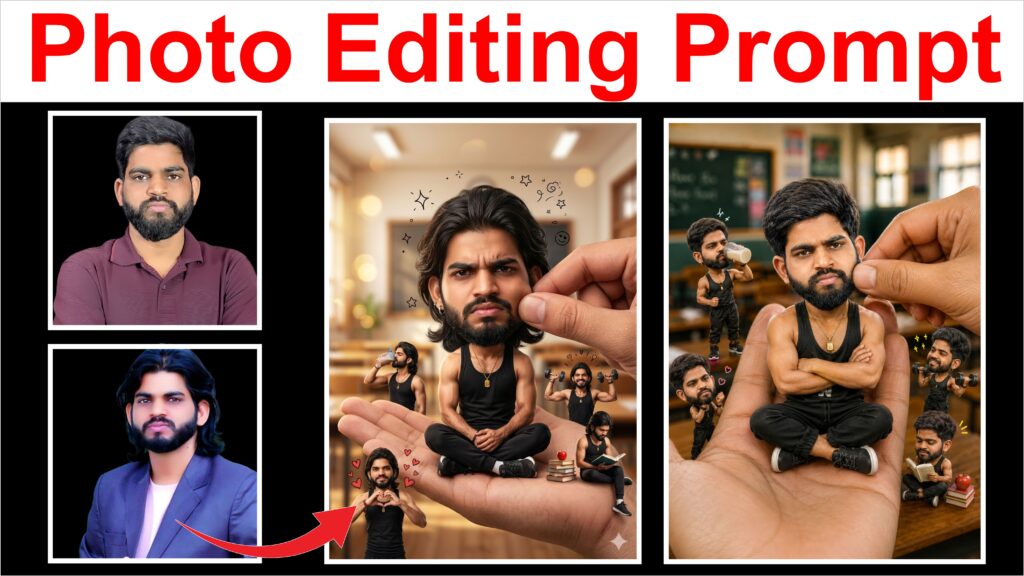
Create a hyper-realistic miniature caricature scene of a stylish young Indian man with fluffy textured hair, trimmed beard, and expressive face, sitting cross-legged on a giant human palm inside a classroom background. The character should have an oversized realistic head and a tiny muscular body, wearing a black gym tank top, black joggers, black sneakers, earrings, and a gold pendant necklace.
The main tiny character looks slightly angry and emotional while a giant human hand gently pinches his cheek from the side. Around him, add multiple miniature versions of the same character doing different activities:
one drinking a protein shake
one showing a cute pose with heart doodles
one lifting dumbbells happily
one sitting and reading a book near stacked books and an apple
Background should be a blurred cinematic classroom with warm lighting and shallow depth of field (bokeh effect). Add tiny doodle elements like sparkles, hearts, and playful icons around the mini characters.
Style should be ultra detailed, photorealistic, cinematic lighting, realistic skin texture, 3D caricature proportions, dreamy atmosphere, soft shadows, high detail, DSLR quality, vibrant warm tones, fantasy miniature world aesthetic.
Camera & Quality:
85mm lens, shallow DOF, HDR, ultra realistic, 8K, sharp focus on main character, soft blurred background.
Aspect Ratio: 5:7 portrait.