
Mastering the art of the photo editing prompt is the ultimate superpower for modern creators. Whether you are nudging an AI generator like Midjourney to life or using advanced AI tools within Photoshop and Lightroom, the way you craft your text dictates the final masterpiece. A prompt is not just a sentence; it is a direct bridge between your imagination and pixels.
To write a flawless photo editing prompt, you must think like both a director and a traditional darkroom editor. The secret lies in a structured approach that covers subject, environment, lighting, and style.
The Anatomy of a Perfect Prompt
Core Action and Subject: Start with clarity. Clearly state what you want to modify, add, or create. Instead of saying “fix the background,” try “replace the chaotic city background with a serene, misty pine forest.”
Lighting and Atmosphere: Light dictates emotion. Specify the time of day or the light quality. Phrases like “bathed in golden hour sunlight,” “moody cinematic cyberpunk lighting,” or “soft studio Rembrandt lighting” immediately shift the narrative.
Technical Details: Guide the AI on how the photo should feel technically. Mention camera styles, lens types, or editing aesthetics. Terms like “shot on 35mm film,” “high-contrast monochrome,” “shallow depth of field,” or “vibrant color grading” give the algorithm precise stylistic boundaries.
The Power of Negative Space: Sometimes, what you leave out is as important as what you put in. Many platforms allow negative prompts. Use them to banish unwanted elements like “blurry, oversaturated, extra limbs, or distorted textures.”
Finding the Right Balance
A common pitfall is over-prompting. Jamming fifty descriptive adjectives into a single text box creates digital noise, leaving the AI confused. Instead, focus on high-impact keywords. Instead of writing “a really, really beautiful sky with lots of clouds and a bright pink and orange sun that looks like a painting,” streamline it to “dramatic cumulus clouds during a vivid cotton-candy sunset, impressionistic style.”
Iteration is Key
Rarely does the first prompt yield absolute perfection. Treat photo editing prompts as an ongoing conversation. If the initial result is too dark, inject terms like “lifted shadows” or “high-key lighting.” If the details are soft, add “sharp focus” or “intricate textures.”
Ultimately, writing prompts for photo editing is about translating visual intuition into descriptive language. By combining clear subjects with precise lighting and technical camera terminology, you unlock the ability to manipulate digital imagery with unprecedented speed and creative control.
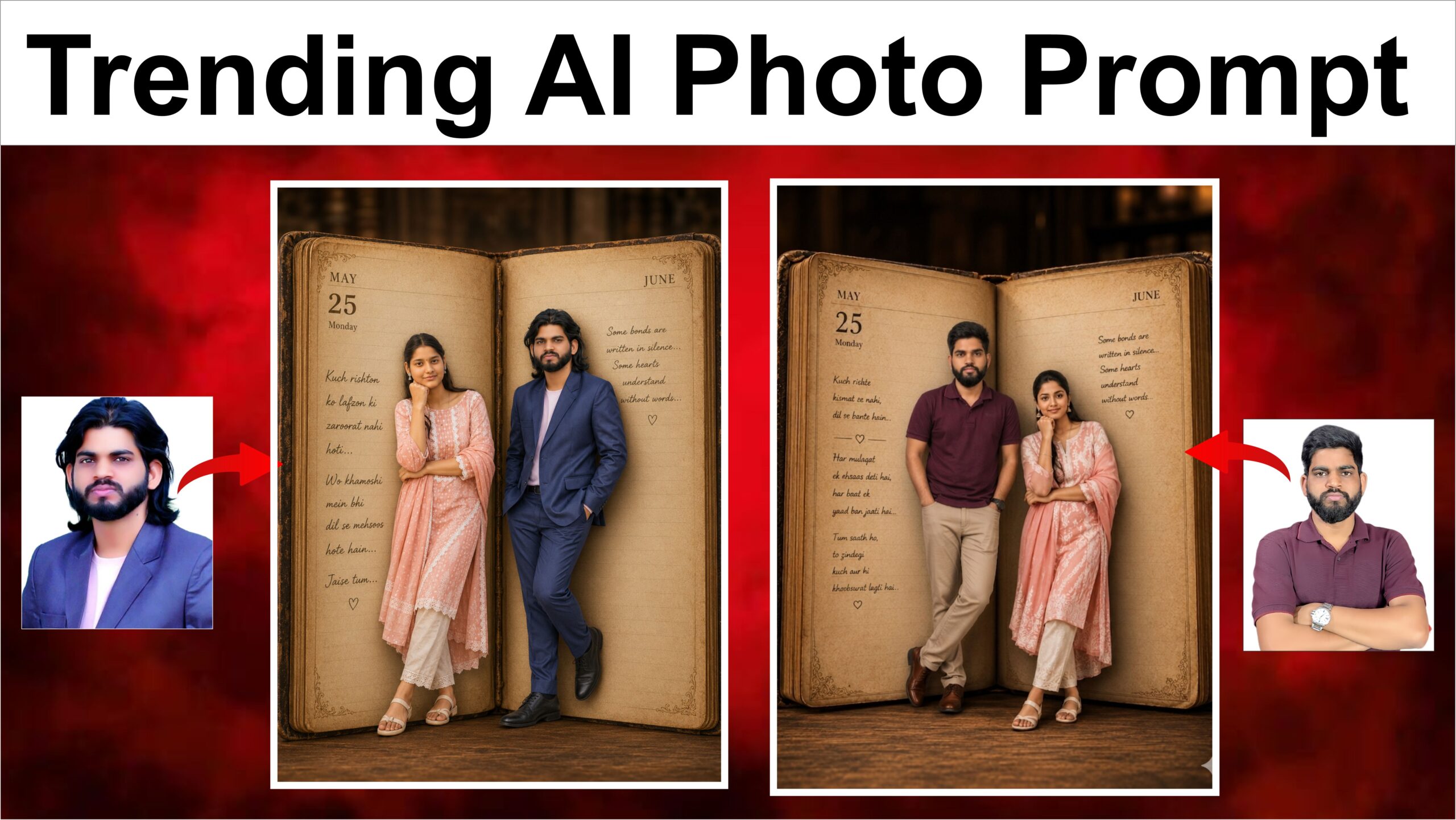
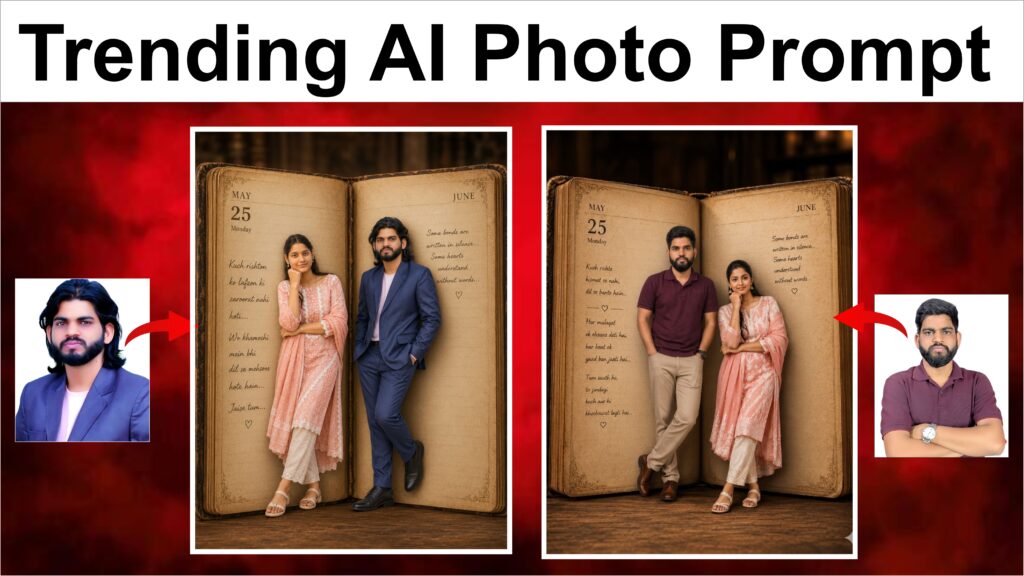
Book A Cauple
A creative concept photo of a young Indian couple, each standing inside the pages of a giant open vintage diary book. The book is large, aged, with yellowed pages — left page shows “MAY 25 Monday” printed in old diary format with English/Hindi handwriting notes, right page shows “JUNE” the book spine divides them in the center. same face 100% match