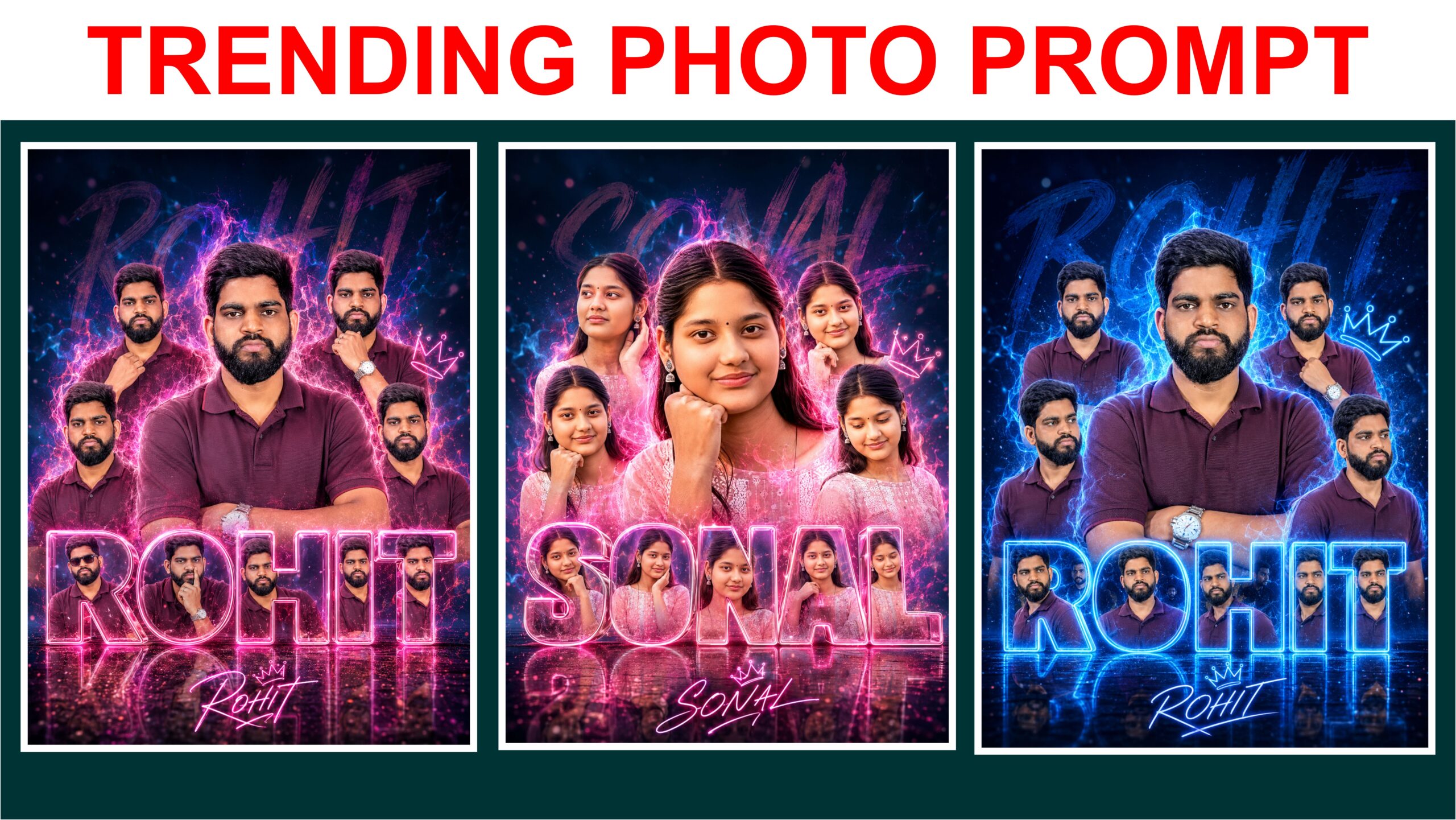
The art of generating images through Artificial Intelligence has revolutionized how we approach creativity, marketing, design, and personal expression. At the heart of this revolution lies a simple yet profoundly complex tool: the photo prompt. An AI photo prompt is a text-based instruction given to a generative AI model—such as Midjourney, DALL-E 3, or Stable Diffusion—to guide it in creating a specific visual image. While it might seem as simple as typing “a dog in a hat,” crafting a truly spectacular AI photo requires an understanding of how these models interpret language, art history, and photographic mechanics.
To master the AI photo prompt, one must think less like a computer programmer and more like a film director, a painter, and a photographer combined.
The Anatomy of a High-Quality Photo Prompt
A successful AI photo prompt rarely relies on a single subject. Instead, it weaves together several layers of descriptive detail to give the AI a complete blueprint of the desired image. A robust prompt structure generally flows from the core subject to environmental details, and finally to technical and stylistic specifications.
1. The Core Subject
This is the anchor of your image. It answers the fundamental question: What are we looking at? It could be a person, an animal, an inanimate object, or a mythical creature. The key here is specificity. Instead of prompting “a man,” a more effective prompt would be “an elderly fisherman with a weathered face and a gray beard.”
2. Action and Emotion
What is the subject doing, and what is the mood? Action words inject life into the generation. Terms like “laughing heartily,” “staring intently into the distance,” or “sprinting through the rain” give the AI clear behavioral cues. Emotion words like “melancholy,” “serene,” or “triumphant” heavily influence the color palette and lighting choices the AI will make automatically to match that mood.
3. Environment and Setting
Where is this taking place? The background is just as important as the subject. Details about the location, time of day, weather, and surrounding elements ground the image in reality. For instance, “in a neon-lit Tokyo alleyway during a midnight downpour” provides rich context that transforms a simple portrait into a cinematic narrative.
4. Lighting and Color Palette
Lighting is arguably the most critical factor in photography, and the same holds true for AI-generated images. Explicitly stating the lighting type dictates the entire atmosphere. Popular lighting prompts include “golden hour light,” “dramatic chiaroscuro,” “soft studio lighting,” or “harsh midday sun with deep shadows.” Color palettes can also be directed using terms like “muted earthy tones,” “vibrant cyberpunk neons,” or “monochromatic sepia.”
5. Technical Camera Specifications
To make an AI generation look like a genuine photograph rather than a digital painting, you must speak the language of photography. Instructing the AI on camera angles, lens types, and film stocks yields highly realistic results. Using phrases like “shot on 35mm film,” “close-up portrait,” “low-angle shot,” or specifying a lens like “85mm f/1.4 lens” signals the AI to mimic depth of field, natural blur (bokeh), and realistic distortion.
The Evolutionary Shift: Descriptive vs. Technical
In the early days of AI image generation, prompts were often cluttered with “buzzwords” intended to force the AI into outputting high quality. Users routinely appended phrases like “photorealistic,” “hyper-detailed,” “8K resolution,” or “unreal engine rendering” to the end of their text strings.
However, modern AI models have evolved. Current iterations are trained on massive datasets with sophisticated natural language processing. They understand context, nuance, and artistic intent far better than their predecessors. Today, adding “photorealistic” is often redundant and can even confuse the model. Instead, modern prompt engineering relies on descriptive substance. If you want a detailed image of a jacket, describing the “intricate leather grain and frayed stitching” is infinitely more effective than simply typing “highly detailed jacket.”
Common Pitfalls in AI Prompting
While AI models are incredibly powerful, they are not psychic. Beginners often fall into a few common traps that lead to frustrating results.
Over-complication: Flooding a prompt with too many conflicting ideas can cause “prompt bleeding,” where the AI blends concepts together or ignores elements entirely. If you ask for a “blue cat holding a red apple while riding a green bicycle in a yellow desert,” the AI might struggle to assign the colors correctly.
Negative Prompts: Sometimes, telling the AI what not to include is just as important as telling it what to include. Many platforms offer a negative prompt field where you can list unwanted elements like “blurry,” “deformed hands,” “extra limbs,” or “text.”
Abstract Concepts: AI struggles with abstract metaphors. Requesting an image that represents “the feeling of eternal existential dread” will yield highly unpredictable results. It is always better to translate abstract emotions into concrete visual elements, such as “a solitary figure standing at the edge of a massive, crumbling stone cliff overlooking a dark, stormy ocean.”
The Future of the Visual Narrative
As generative AI continues to advance, the line between traditional photography and synthetic imagery will keep blurring. The AI photo prompt is no longer just a gimmick for generating fun avatars; it has become a legitimate medium for creative direction. Concept artists use it for rapid storyboarding, marketers use it to visualize campaigns before a physical shoot, and designers use it to push the boundaries of surrealism.
Ultimately, the power of an AI photo prompt does not lie within the machine, but within the human imagination. The AI acts as the camera and the darkroom, but the human remains the visionary. By learning to communicate effectively with these algorithms through precise, evocative language, anyone can unlock the ability to turn a fleeting thought into a stunning, photo-grade reality.