
About AI Photo Prompt
Artificial Intelligence (AI) has transformed the way people create and edit images. One of the most exciting developments in this field is the use of AI photo prompts. These prompts act as detailed instructions that help AI image generators create stunning visuals from simple text descriptions. Whether you are a graphic designer, content creator, photographer, marketer, or social media influencer, AI photo prompts can significantly improve your creative workflow and help you generate unique images in seconds.
An AI photo prompt is a written description that tells an AI model what kind of image to create. The prompt can include details such as the subject, background, lighting, colors, camera angle, style, mood, and even specific artistic techniques. The more detailed the prompt, the more accurate and impressive the generated image becomes. Modern AI tools can understand complex instructions and produce highly realistic, artistic, or imaginative visuals based on the prompt provided.
The popularity of AI photo prompts has grown rapidly because they make professional-quality image creation accessible to everyone. In the past, creating a high-quality image often required advanced design skills, expensive software, and many hours of work. Today, with the help of AI image generation technology, users can simply describe their ideas in text form and receive beautiful images within moments.
One of the biggest advantages of AI photo prompts is their versatility. They can be used to create portraits, landscapes, product advertisements, social media posts, book covers, posters, wedding invitations, digital artwork, and much more. Businesses use AI-generated images for marketing campaigns, while content creators use them to produce eye-catching visuals for blogs, YouTube thumbnails, Instagram posts, and other online platforms.
Writing an effective AI photo prompt is an important skill. A good prompt should be clear, descriptive, and specific. For example, instead of writing “a girl standing in a park,” a better prompt would be “a young woman wearing a red dress standing in a green park during sunset, golden hour lighting, realistic photography, shallow depth of field, high detail, professional camera quality.” This level of detail helps the AI understand exactly what the user wants and leads to better results.
Many AI artists and designers follow a structured approach when writing prompts. They typically include the main subject, environment, lighting conditions, artistic style, color scheme, camera settings, and image quality. These elements work together to guide the AI toward generating a visually appealing image. Some users also add keywords such as ultra-realistic, cinematic, 8K resolution, HDR, professional photography, soft lighting, or fantasy art to achieve specific visual effects.
AI photo prompts are also valuable for educational purposes. Students, teachers, and researchers can use them to create illustrations, diagrams, and visual representations of concepts. This makes learning more engaging and helps communicate ideas effectively. In creative industries, AI prompts are often used during brainstorming sessions to quickly visualize concepts before investing time in detailed design work.
The rise of AI image generation platforms has created a new creative ecosystem where users constantly share and improve prompts. Online communities, blogs, and social media groups provide prompt examples, tutorials, and inspiration for beginners and professionals alike. By studying successful prompts, users can learn how to create more detailed and effective instructions for AI systems.
Another important aspect of AI photo prompts is customization. Users can experiment with different styles such as realistic photography, watercolor painting, digital art, cartoon illustration, anime, cyberpunk, fantasy, vintage, or futuristic themes. This flexibility allows creators to explore unlimited artistic possibilities and develop unique visual identities for their projects.
Despite their many benefits, AI photo prompts should be used responsibly. Users should respect copyright laws, avoid misleading content, and ensure ethical use of AI-generated images. Transparency and responsible creativity are essential as AI technology continues to evolve and become more powerful.
The future of AI photo prompts looks extremely promising. Advances in machine learning and image generation technologies are making AI systems more accurate, creative, and capable of understanding complex instructions. Future AI tools may offer even greater control over image composition, facial expressions, object placement, and artistic styles, allowing users to create highly customized visuals with ease.
In conclusion, AI photo prompts have revolutionized digital image creation by turning simple text descriptions into powerful visual content. They save time, enhance creativity, reduce production costs, and make professional image design accessible to people of all skill levels. As AI technology continues to advance, the importance of mastering prompt writing will grow, making it an essential skill for designers, marketers, bloggers, photographers, and content creators worldwide. AI photo prompts represent the perfect combination of creativity and technology, opening new opportunities for visual storytelling in the digital age.
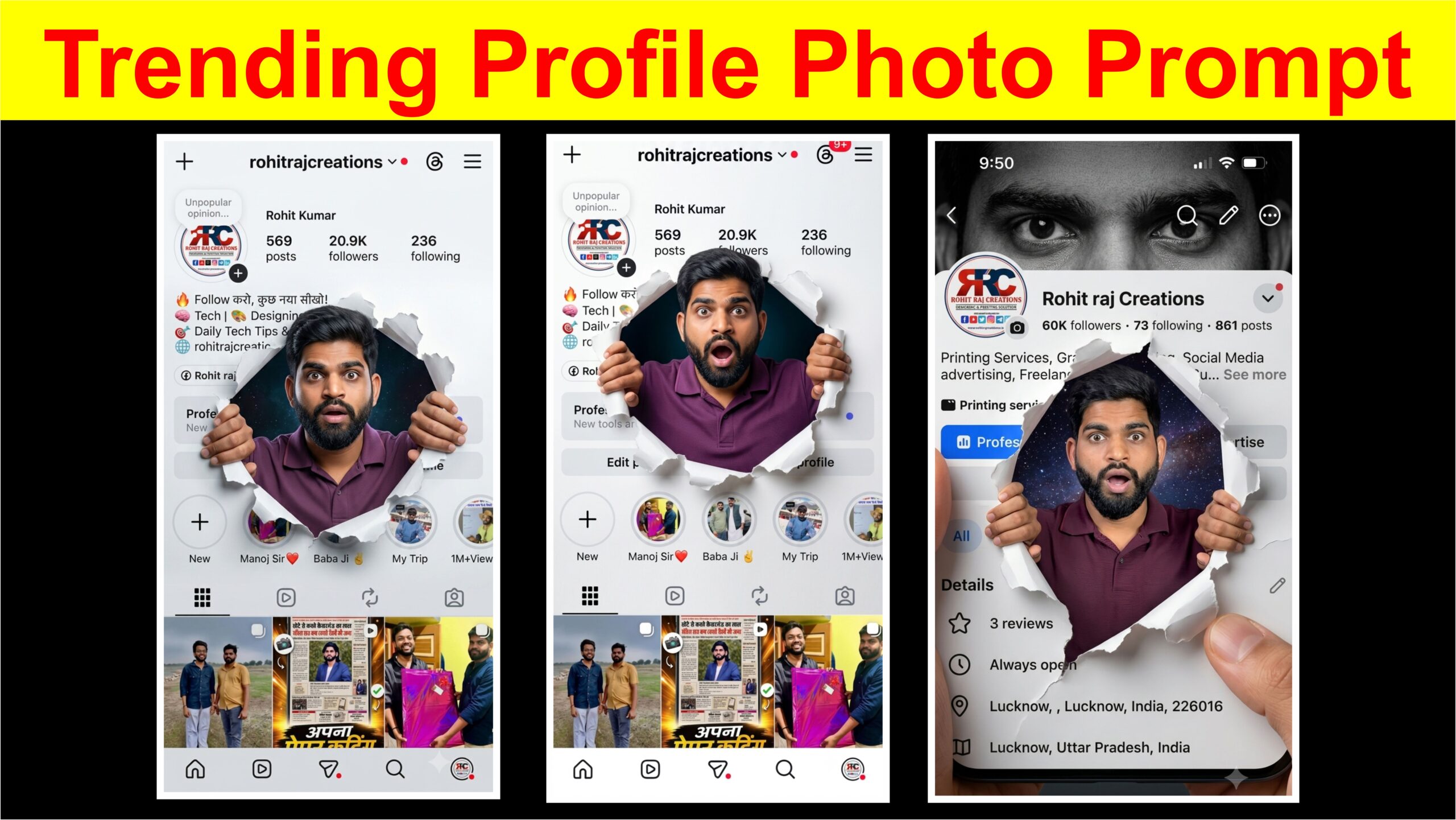
A creative 3D photo manipulation of a social media profile interface (photo 1) featuring a surprised young man (photo 2). He is breaking through a torn paper effect on the screen, holding the ripped edges with both hands. The tear reveals a dark background behind him, adding depth. The user interface resembles a modern social media profile page with a profile picture, the username “(Rohit Raj Creations),” a verification badge, bio text, and follower statistics. The top banner shows a black-and-white close-up of eyes. Clean and minimalist layout, soft shadows, realistic lighting, high level of detail, depth of field, ultra-realistic textures, cinematic composition, vibrant color contrast, trending Al art style.