
1. What is Flow AI? The Core Concept
At its heart, Flow AI is about orchestration.
In the early days of AI, you gave a prompt and got a result. It was a one-to-one interaction. Flow AI changes this by creating a “pipeline” or “graph” where multiple AI models, data sources, and software tools are linked together.
Imagine you want to write a weekly market report.
Old Way: You manually find data, paste it into a prompt, ask for a summary, then manually format it.
Flow AI Way: A “flow” is triggered. The AI automatically fetches real-time data from an API, passes it to a specialized analytical model, sends the analysis to a creative writer model, and then automatically pushes the final draft to your email or CMS.
2. The Components of an AI Flow
To understand how these systems work, we have to look at the three main layers:
A. The Trigger
Every flow needs a starting point. This could be a user message, a scheduled time, or a “webhook” (e.g., a new lead signing up on your website).
B. The Logic (Chains and Agents)
This is the “brain.” Instead of one massive model trying to do everything, the flow breaks the task into smaller steps. This often uses LangChain or AutoGPT logic. For example:
Step 1: Critique the user’s intent.
Step 2: Search the web for relevant facts.
Step 3: Draft the response.
Step 4: Check the response for tone and accuracy.
C. The Integration
Flow AI isn’t a silo. It connects to the tools you already use—Slack, Google Drive, Shopify, or GitHub. It acts as the “connective tissue” between your data and your actions.
3. Why is it Gaining Popularity?
The “Flow” approach solves the biggest problem with modern LLMs (Large Language Models): Unreliability.
By breaking a task into a structured flow, developers can insert “guardrails.” If the AI’s output in Step 2 is nonsensical, the flow can be programmed to retry or ask for human intervention before moving to Step 3. This makes AI viable for professional enterprise use rather than just a fun chatbot.
5. The User Experience: No-Code Visual Builders
One of the most exciting parts of the Flow AI movement is the rise of Visual Programming. Tools like Flowise, LangFlow, or Zapier Central allow people who can’t code to build AI agents.
You literally drag a “box” representing GPT-4, connect it with a “string” to a Google Search box, and link that to a PDF generator. It democratizes AI, moving the power from data scientists to the average office worker.
6. Challenges and the “Human-in-the-Loop”
Despite the efficiency, Flow AI isn’t perfect.
Latency: The more “steps” in a flow, the longer it takes to complete.
Cost: Every “node” in a flow usually costs tokens. Complex flows can become expensive quickly.
The “Black Box” Problem: If a flow has 20 steps and the final result is wrong, finding which specific step failed can be a headache.
This is why the most successful Flow AI implementations use a Human-in-the-Loop model. The AI handles 90% of the heavy lifting, but the “flow” stops at a critical juncture to wait for a human “Thumb Up” before sending a final email or publishing a post.
7. The Future: Autonomous Agents
The ultimate evolution of Flow AI is the Autonomous Agent. Instead of you designing the flow (Step A -> Step B), you simply give the AI a goal: “Research this competitor and give me a strategy.” The AI then creates its own flow on the fly, deciding which tools to use and which steps to take. We are currently moving from “Static Flows” (designed by humans) to “Dynamic Flows” (designed by AI).
Summary
Flow AI is more than just a buzzword; it’s the transition from AI as a “search box” to AI as a “teammate.” By structuring intelligence into repeatable, integrated workflows, we move closer to a world where the “grunt work” of digital life is handled silently in the background.
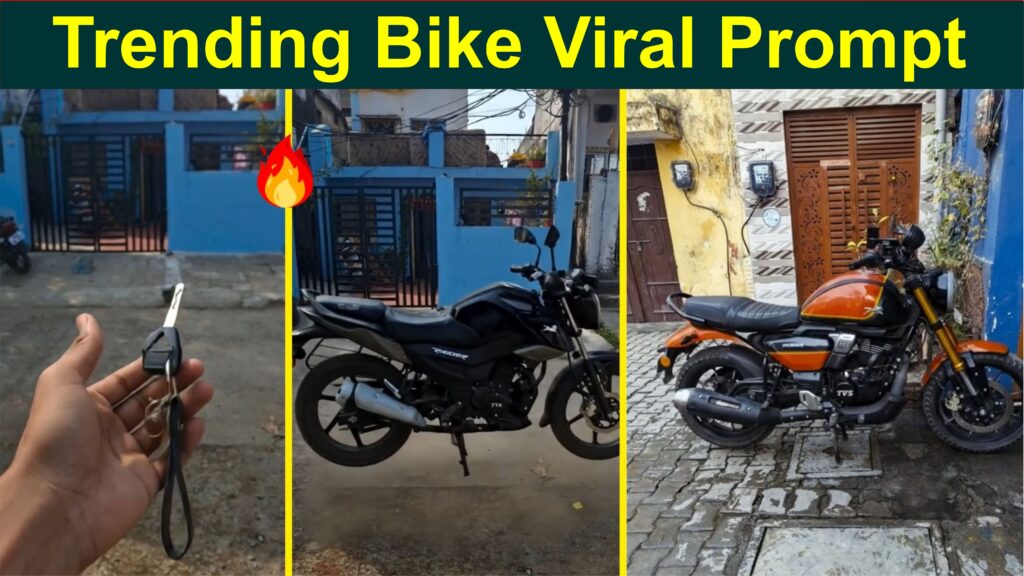
Use first frame as starting reference and second frame as ending reference. Transform the key into the motorcycle smoothly with realistic materialization effect. Maintain exact camera angle and background. Add subtle dust and cinematic motion. Keep the subject position stable. Avoid glitches, avoid stretching, keep realistic lighting and shadows. Ultra realistic.